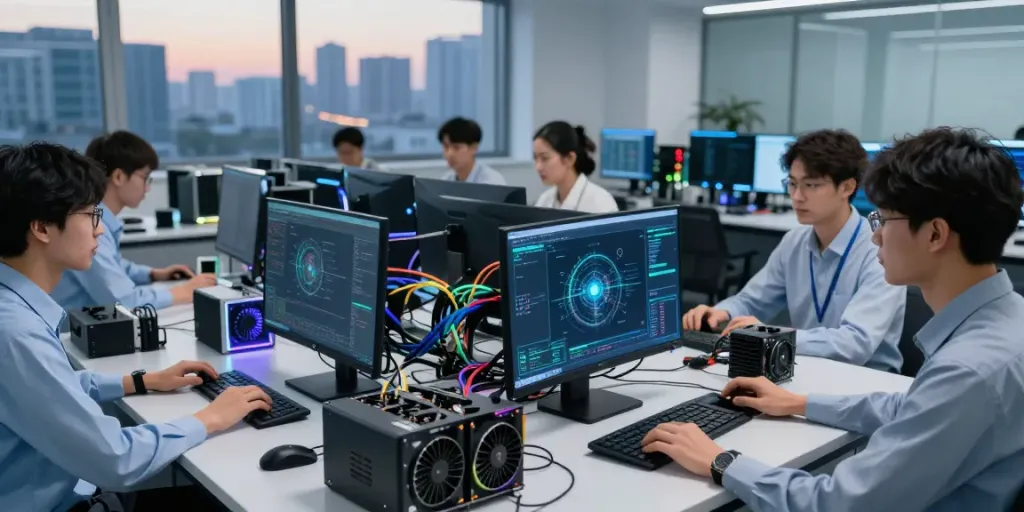
Understanding GPU Computing: Fundamentals and Importance
GPU computing, or Graphics Processing Unit computing, has transformed the landscape of computing by enabling massive parallel processing capabilities. This evolution has become increasingly crucial as industries demand more processing power due to the rise of complex AI models and data-intensive applications. As businesses continue to capitalize on artificial intelligence (AI), understanding the intricacies of GPU computing becomes essential. When exploring options, GPU computing serves as a foundational component, allowing for efficient processing of large datasets in real-time, thus directly impacting performance outcomes in various applications.
What is GPU Computing?
At its core, GPU computing is the use of a GPU to perform computations that were traditionally handled by a CPU. While CPUs are optimized for sequential processing, GPUs excel in handling multiple tasks simultaneously, making them ideal for operations that can be parallelized. This capability is particularly advantageous in fields such as machine learning, where large amounts of data need to be processed quickly and efficiently.
Why GPU Computing is Essential for AI
The demand for GPU computing has surged with the rapid advancement of AI technologies. AI models, particularly deep learning frameworks, require extensive computational resources to train and infer. The parallel architecture of GPUs allows for faster training times and improved model performance, enabling researchers and businesses to leverage AI for various applications, from natural language processing to image recognition. By reducing the time required for these compute-heavy tasks, organizations can innovate faster and respond to market demands more effectively.
Key Concepts and Terminology in GPU Computing
- CUDA: A parallel computing platform and application programming interface model created by NVIDIA, allowing developers to utilize the GPU for general purpose processing.
- Tensor Cores: Specialized cores in NVIDIA GPUs designed for deep learning operations, significantly improving performance for matrix operations commonly used in AI.
- Parallel Processing: The execution of multiple calculations or processes simultaneously, which is a defining feature of GPU computing.
- GPU Acceleration: The use of a GPU to perform computations that would otherwise be handled by the CPU, thereby increasing processing speed and efficiency.
Common Challenges in GPU Computing
Despite its advantages, GPU computing is not without challenges. Organizations face several hurdles when implementing and optimizing GPU-based solutions, which can impact their overall effectiveness and resource allocation.
Identifying Performance Bottlenecks
One common challenge in GPU computing is identifying performance bottlenecks. While GPUs can significantly boost computational speed, improper utilization or inefficiencies in data transfer between CPU and GPU can lead to suboptimal performance. Understanding where these bottlenecks occur is crucial for maximizing the benefits of GPU architectures.
Overcoming Hardware Limitations
Hardware limitations, such as insufficient memory or outdated GPU models, can also hinder performance. To fully leverage the capabilities of modern GPUs, organizations must ensure that their hardware is up to date and capable of handling the demands of current AI workloads.
Addressing Cooling and Power Issues
The high-performance nature of GPUs demands significant power and generates heat, requiring efficient cooling solutions. Managing these thermal aspects is essential to prevent overheating and hardware failure, which can disrupt operations and increase downtime.
Effective Strategies to Enhance GPU Performance
To maximize the potential of GPU computing, organizations can adopt several strategies that focus on optimizing workloads and resource utilization.
Optimizing Workloads for GPUs
Optimizing workloads specifically for GPU architecture can greatly enhance performance. This includes adjusting algorithms to better fit the parallel processing capabilities of GPUs, ensuring that tasks are distributed evenly across available cores.
Utilizing Parallel Processing Techniques
Utilizing parallel processing techniques, such as batch processing and pipeline processing, helps in effectively managing workloads across multiple GPUs. By structuring tasks to take advantage of concurrent execution, organizations can significantly reduce the time required for data processing.
Scaling GPU Infrastructure Efficiently
As workload demands increase, scaling GPU infrastructure becomes critical. This involves not only adding more GPU resources but also ensuring that the architecture can support increased data throughput without sacrificing performance. Cloud-based GPU solutions can provide flexible scalability to meet fluctuating demands.
Real-World Applications and Case Studies
Numerous organizations across various sectors have harnessed GPU computing to drive innovation and efficiency. By examining real-world applications, we can gain insights into the transformative power of GPU technology.
AI Startups Leveraging GPU Computing
Many AI startups rely on GPU computing to build and deploy their models efficiently. For instance, startups focused on natural language processing utilize GPUs to train complex language models, enabling them to deliver sophisticated AI-driven chatbots and virtual assistants.
Enterprise Solutions Utilizing GPU Infrastructure
Large enterprises have also adopted GPU computing to enhance their data analytics capabilities. Industries such as finance and healthcare use GPU-accelerated applications to analyze vast datasets in real time, leading to more informed decision-making processes.
Comparative Analysis of Success Stories
Comparative analyses of successful implementations, such as those by tech giants like Google and NVIDIA, highlight the efficiency gains achieved through GPU computing. For example, Google’s DeepMind has leveraged GPU clusters to train AI models that surpass human performance in various tasks.
The Future of GPU Computing: Trends and Predictions for 2026
Looking ahead, GPU computing will continue to evolve, driven by emerging technologies and shifting industry demands. Understanding these trends can help organizations prepare for future developments in computational technology.
Emerging Technologies Impacting GPU Computing
Emerging technologies like quantum computing and advanced AI algorithms are poised to impact GPU computing significantly. As these technologies mature, they may redefine how GPUs are utilized in processing and analyzing data.
Forecasting Demand in AI Workloads
The demand for GPU computing capacity is expected to grow exponentially as businesses increasingly turn to AI solutions for competitive advantages. Forecasts indicate that this trend will lead to heightened investment in GPU infrastructure and innovations in processing algorithms.
Preparing for Industry Evolutions in GPU Capabilities
To remain competitive, organizations must be proactive in adapting to the rapidly evolving landscape of GPU capabilities. This involves continuous training for staff, investment in cutting-edge technologies, and embracing flexibility in operational strategies.
What Are the Benefits of GPU Computing?
GPU computing offers numerous benefits to organizations, including:
- Increased Speed: Faster processing allows for quicker results and analysis.
- Enhanced Efficiency: Improved resource utilization leads to lower operational costs.
- Scalability: GPU infrastructure can easily be scaled to meet growing data demands.
How Can You Start with GPU Computing?
Organizations looking to adopt GPU computing should start by assessing their current infrastructure and identifying potential areas for improvement. This may involve investing in new hardware, adopting GPU-accelerated software solutions, and training staff on best practices for GPU utilization.
What Tools Are Essential for Effective GPU Computing?
Key tools for effective GPU computing include software frameworks like TensorFlow and PyTorch, which are designed to leverage GPU capabilities. Additionally, monitoring tools that track GPU performance can help in identifying areas for optimization.
What Are the Common Misconceptions About GPU Computing?
Common misconceptions about GPU computing include the belief that it is only useful for gaming or graphics applications. In reality, GPU computing has proven essential across various fields, including AI, scientific research, and data analytics.
How Does GPU Computing Contrast with Traditional CPU Systems?
GPU computing contrasts with traditional CPU systems primarily in terms of architecture and processing capabilities. While CPUs handle tasks sequentially and excel at single-threaded performance, GPUs are built for parallel execution, allowing them to perform many operations simultaneously.
Which Industries Benefit Most from GPU Computing?
Industries that benefit most from GPU computing include:
- Healthcare: For medical imaging and genomics.
- Finance: For data analysis and risk assessment.
- Automotive: In autonomous vehicle development.
- Entertainment: For rendering and visual effects in films and games.